It is a fair question, and a common one after a run of bad hands. A live casino table looks like a video call with a croupier, so it is natural to wonder what happens off camera. The short answer is that a licensed live game is dealt with real cards or a real wheel, read by machines, recorded, and tested under UK rules. The longer answer is below, including the part that matters more than any conspiracy: every game has a house edge, and that edge is built in openly.
01What happens at a live table
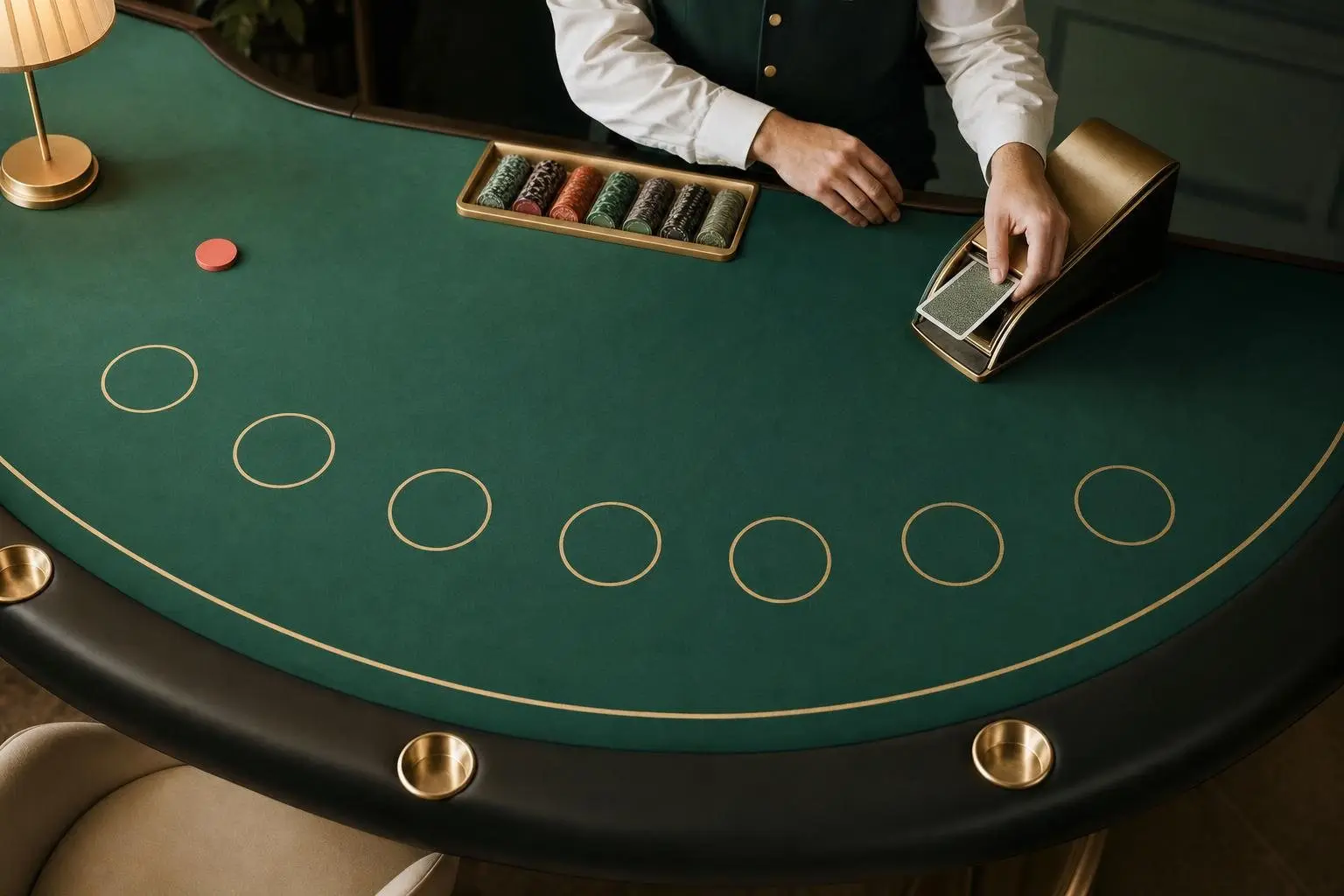
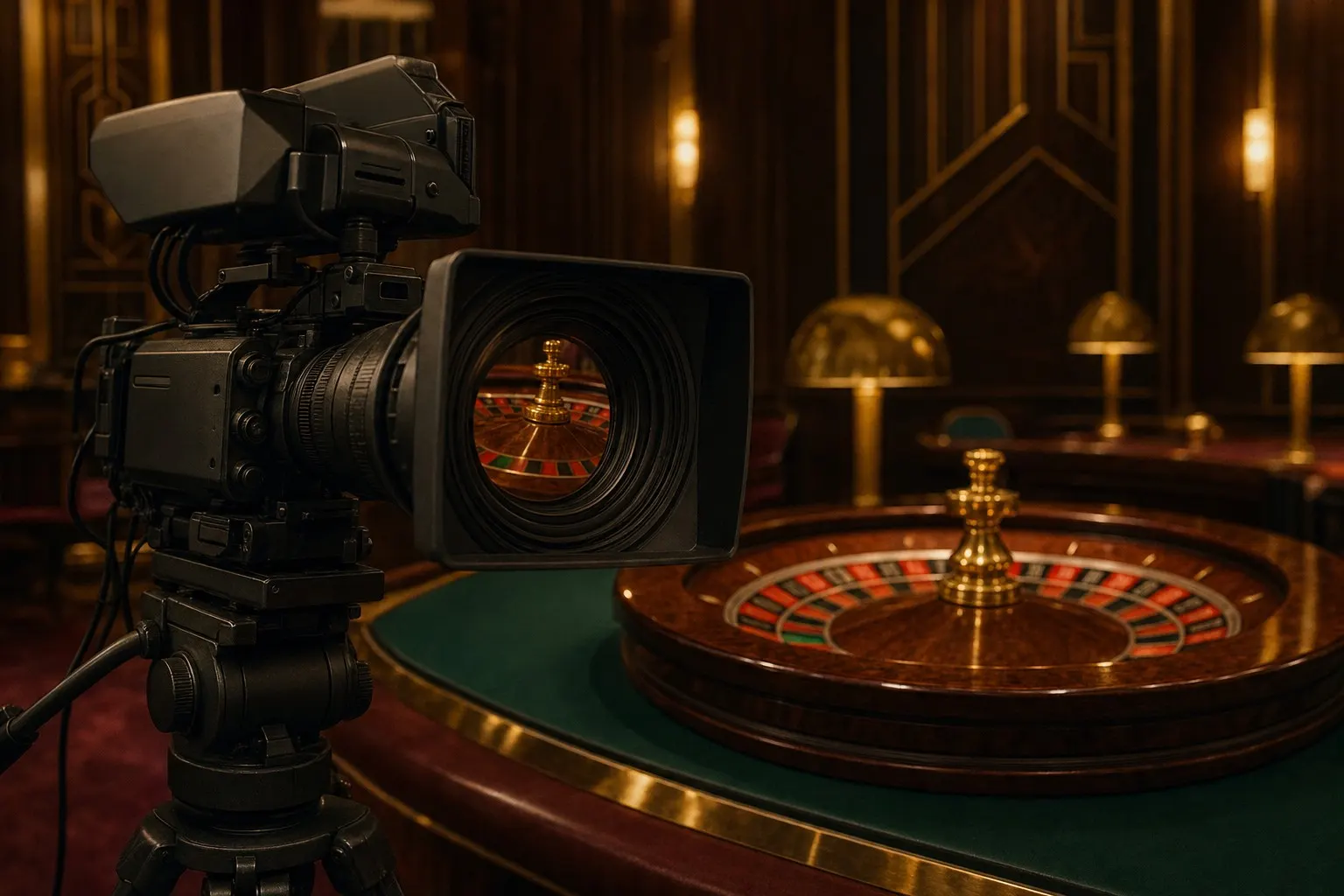
A live dealer table sits in a studio, often one of many in the same building. Several cameras cover the table from fixed angles. The dealer shuffles or loads a shoe, deals, spins or draws, and the stream goes out to players at many casinos at once.
The dealer does not decide your result and does not type it in. Machines read the outcome:
- Cards pass a scanner as they leave the shoe, and the camera image is read by optical character recognition (OCR). The two readings feed the game server, which settles the bets.
- Roulette wheels have sensors that register the pocket where the ball lands. The OCR reading of the camera image provides a second check.
- Wheels in game shows, such as the Crazy Time and Monopoly Live wheels, are physical. Sensors record where the pointer stops.
The game server, not the dealer, pays the bet. On Evolution tables a piece of studio equipment called the Game Control Unit encodes the video and links the physical table to the software, so the result appears on screen within a moment of the card or ball settling.
Two independent readings matter because each one can catch the other's mistakes. A card scanner reads the physical card, while the camera reading works from the picture you see on screen. When the two agree, the server records the result and settles every bet placed on that round. When they disagree, or a card is dealt face down by accident, the round pauses and a shift manager in the studio checks the footage before anything is paid. The same applies to a ball that jumps out of the wheel or lands between pockets: the dealer calls a no-spin and the round is repeated rather than settled on a guess. Every round carries a round ID, shown in your game history, which ties your bet to the recorded video and the logged result.
02Where randomness comes from a computer
Some live games add a random number generator on top of the physical game. In Lightning Roulette, the numbers struck by lightning and their multipliers are picked by an RNG before the spin. Lightning Baccarat does the same for its multiplier cards, and game shows use RNG for features such as Crazy Time's Top Slot. The physical result and the RNG features are separate, and the RNG has to be tested like any slot.
Auto Roulette tables, with no dealer at all, are still physical wheels; the ball launch is mechanical.
Know your stake? See which UK casinos list a table at your budget.
Find my table
03Who checks live casino games in the UK
Every casino serving players in Great Britain needs an operating licence from the UK Gambling Commission. The studio that streams the games needs its own licence too. Both are listed on the Commission's public register at gamblingcommission.gov.uk.
The Commission's Remote Gambling and Software Technical Standards cover how games are built and run. Among other things they require:
- Games to be tested by an approved independent test house before release, and again after significant changes.
- RNG features to produce outcomes that are random and unpredictable.
- The rules and the return to player to be displayed to the player, usually in the help screen.
- Records of every game outcome to be kept, so disputes can be checked against what was dealt.
In practice, testing a live game looks less dramatic than people imagine. The test house checks that the game software follows the published rules, that payouts match the paytable, that any RNG feature passes statistical tests for randomness, and that results are logged correctly. The studio's physical equipment, such as shoes, shufflers and wheels, is inspected and maintained to its own procedures, and wheels are checked for wear or bias that could make some pockets come up more often than others. The certificate covers a specific version of the game, which is why a significant change sends it back for testing.
If something goes wrong at a table, for example a card misread or a stream dropping mid-round, the game rules in the help screen set out what happens to the bet. Most providers void the round or settle it on the recorded result.
04Why a losing streak is not proof of rigging
Streaks feel meaningful, but each round of a live game is independent of the last. A roulette wheel has no memory, and a freshly shuffled shoe does not know what happened in the previous one. On a single-zero wheel, 18 of the 37 pockets are red, so the chance of red on any spin is 18 in 37, just under half. That chance is the same after five blacks in a row as it is on the first spin of the day.
Long runs are also more common than intuition suggests. The chance of five reds in a row is (18/37) to the power of five, roughly 2.7%, or about one sequence in 37. Ten in a row is rarer, about one in 1,350, but a busy live table spins hundreds of times a day and thousands of players are watching, so someone sees a streak like that regularly. A run that looks impossible from one seat is ordinary across a whole studio. What would point to a real problem is a pattern that persists over many thousands of rounds, and that is exactly what outcome records and test house checks are there to catch.
05What to do if a result looks wrong
If you think a round was settled incorrectly, start with your game history. Note the round ID, the time, the table name and the result shown. Then contact the casino's customer support and ask them to review the round; the casino can request the recorded footage and logs from the studio. Keep a copy of your messages and any reply.
If you are not happy with the casino's final response, every UK-licensed casino must tell you how to escalate the complaint. The next step is the casino's approved alternative dispute resolution (ADR) service, which is independent of the casino and free for the player. The casino's complaints page names the ADR service it uses.
06The house edge is not hidden
A rigged game would take money unpredictably. A licensed live game takes it predictably, through rules everyone can read:
- Live European roulette has a single zero, giving a house edge of 2.70%.
- Live blackjack edges depend on the table rules, typically well under 1% with basic strategy on a 3:2 table.
- On live baccarat, the Banker bet edge is 1.06% on a standard commission table.
- In Crazy Time, Evolution publishes an RTP of 96.08% on the number 1 down to 94.33% on Pachinko.
Over a long session those small percentages add up, and no table setting or dealer can remove them. That is the honest answer to "why do I keep losing at live roulette": the game is designed to return slightly less than it takes, and the margin shows over time.
07What does deserve suspicion
The risk for UK players is not a rigged table at a licensed casino. It is an unlicensed site. Casinos operating without a Gambling Commission licence are outside UK rules on testing, complaints and fair treatment, and their "live" games may not come from a licensed studio at all. Three checks take a minute:
- Find the licence number in the casino's footer and search it on the Commission's register.
- Check the website address is listed against that licence.
- Look at the table tile or help screen for the studio name.
Every operator we cover passes the first two checks; we match each website to the register before listing it.
If gambling has stopped feeling like entertainment, a different set of tools helps more than any fairness check: deposit limits, time-outs and GamStop self-exclusion. The responsible gambling page lists them.